Statements on affairs II.
Lorenza Longhi
Video
The video is available in English
The new online series provides all who are interested with exciting insights into topics and questions about the artistic positions of the exhibitions. For the Artist-Statement, the artists are each asked five short questions, whereby new insights into their work emerge and a current reference to conceptual art is established.
Lorenza Longhi (*1991 Lecco, lives in Zurich) appropriates graphic image materials from advertising and marketing industries, among others, through various artistic processes. By isolating and re-integrating them into art, the power structures hidden behind the imagery are made visible. For the HALLE FÜR KUNST, Longhi combines images of luxury consumer goods with echoes of modernist formal language and incorporates these elements into pavilion-like arrangements.
Artists
Participating artists
Lorenza Longhi
Solo (et al.): Fanta, Milan (2022, 2019, 2016), Ordet, Milan (2022), Kunsthalle Zurich (2021), Weiss Falk, Basel (2021), Bungalow, Berlin (2020), La Plage, Paris (2019), Playmouth Rock, Zurich (2019); Shows (et al.): Layr, Vienna (2022), Swiss Art Awards, Messe Basel (2022), PART, Rimini (2022), Bonner Kunstverein (2022), MACRO, Museum of Contemporarty Art of Rome, Rome (2022), Kunstverein Bielefeld (2021), Fondazione Prada, Venice (2021), Stadtgalerie, Bern (2021), Le Commun, Geneva (2021), Deborah Schamoni, Munich (2021), 17.Quadriennale d’arte, Rom, Rome (2020), Grand Palais, Bern (2020), Hyphen, Milan (2019), Kunst Halle St.Gallen (2019)
More contributions
Performance Total Romance: Partial Repair
Isabel Lewis, Dirk Bell with vocalist, performer and artist Rupert Enticknap and performer and pole dancer Yann Slattery
Video

The performance Total Romance: Partial Repair is the centerpiece of Isabel Lewis and Dirk Bell’s joint exhibition Ever/Repair at HALLE FÜR KUNST Steiermark, and is performed by four performers. In…
Performance Total Romance: Partial Repair Isabel Lewis, Dirk Bell with vocalist, performer and artist Rupert Enticknap and performer and pole dancer Yann Slattery Isabel Lewis, Dirk Bell
Total Romance: Partial Repair
Performance
Slide show

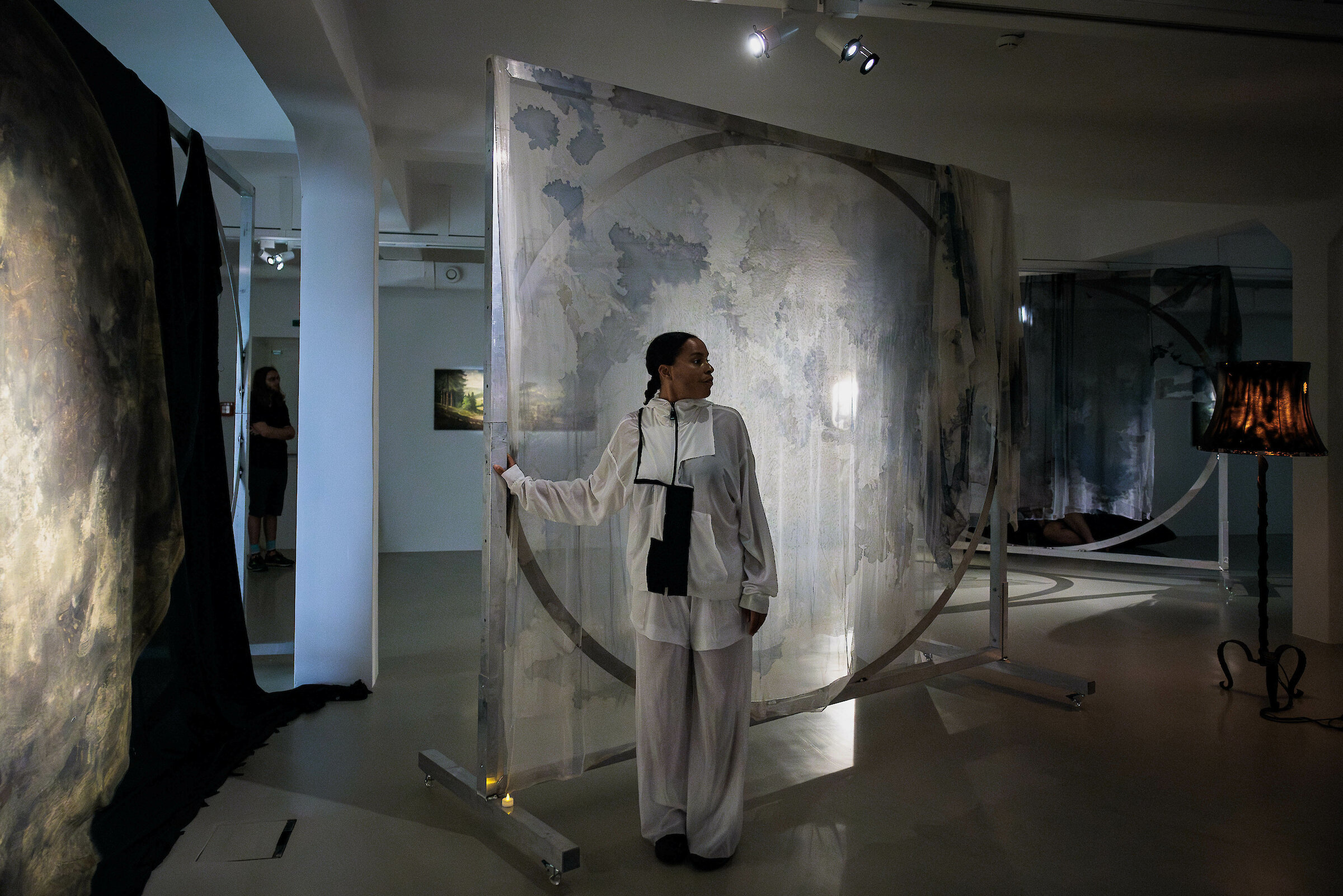
The performance Total Romance: Partial Repair is the centerpiece of Isabel Lewis and Dirk Bell’s joint exhibition Ever/Repair at HALLE FÜR KUNST Steiermark, and will be performed by four performers.
Total Romance: Partial Repair Artist talk with
Thomas D. Trummer and Franz Kapfer
Video

Thomas Trummer and Franz Kapfer have known each other for many years and have collaborated on various occasions. Over the years, a number of exhibitions and published interviews as well as…
Artist talk with Thomas D. Trummer and Franz KapferThe Uncanny within Visual Arts — August Ruhs
Video

Color is both the starting point and the end point for Katherine Bradford, used to depict both diverse communities and the individuals who constitute them. Interweaving abstraction with figuration…
The Uncanny within Visual Arts - August Ruhs Exhibition Tour
Katherine Bradford: American Odyssey
Video

A comprehensive video by kunst-dokumentation.com enables a digital exhibition tour through the show.
exhibition tour katherine bradford Definite or indefinite or…? Debates on gender in art and politics
Silvia Stoller
Video

Katherine Bradford’s painting can be located in the tradition of abstract expressionism, particularly in colour field painting. During her very personal American Odyssey, she developed her very own style: interweaving abstraction and the figurative she creates very special bodies. The bodies’ faces often lack facial expressions.
Silvia Stoller Collective Memory and the Public Realm in the United States
Nassim W. Balestrini
Video

Drawing on examples of US-American monuments, Prof. Dr. Nassim W. Ballestrini’s lecture will discuss collective memory in terms of contemporary debates in the US. Monuments, memorials as well as art in public space contribute significantly to a nation’s culture of remembrance, reflecting political currents and are therefore highly political.
Balestrini Katherine Bradford – American Odyssey
New works
Slide show

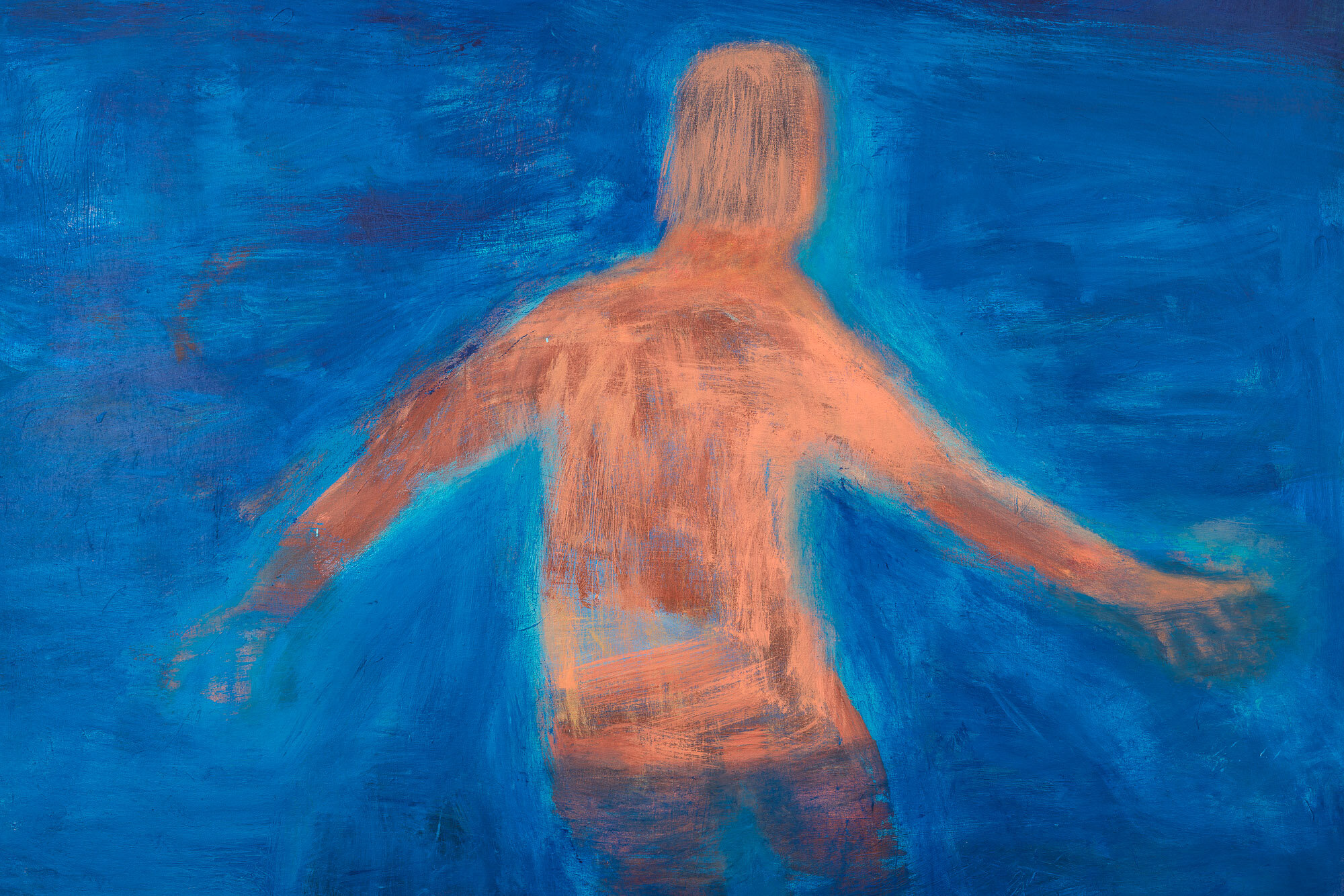
Katherine Bradford’s thinking always begins with color — it is the start and end point of her work. Here abstract and figurative approaches merge. Here the individual and the communal join. This is the…
Katherine Bradford – American Odyssey: New works