Space is the Place
Mira Keratová
Video
The video is available in English.
Art historian and curator Mira Keratová explores divergent perspectives of East and West on the artist’s work and position. Stano Filko’s artistic work begins in Czechoslovakia (today: Slovakia) in the 1960s, a time when artistic freedom was severely limited. While the socialist régime established a one-sided view of the world, Filko is known for his attempt to depict in his art the overall context of the world as an external and internal reality. In 1981 Filko emigrated, he lived and worked in Germany (Düsseldorf) and from 1982 in the United States (New York), returning to Bratislava in 1990. These biographical stages also roughly divide the various phases of the work into which the respective framework conditions can be read.
In her lecture art historian and curator Mira Keratová explores divergent perspectives of East and West on the artist’s work and position.
Artists
Participating artists
Mira Keratová Ph.D.
is an art historian and curator in the field of modern and contemporary art at the Bratislava City Gallery, she also works as a curator for the Central Slovakian Gallery in Banská Bystrica. Keratová studied art history at the Comenius University in Bratislava and received her Ph.D. from the Academy of Fine Arts and Design in Bratislava, where she wrote her doctoral thesis on performance art of 1960s and 1970s and its documentation. She works on the neo-avant-gardes of Eastern Europe and is a specialist in the field of action art and performative art of Czechoslovakia during the repressive period of “normalization” from 1969 – 89. Keratová taught as a lecturer at the Academy of Fine Arts and Design in Bratislava and at the Faculty of Fine Arts of the Technical University in Brno. She is the author of various texts on art and editor of publications on L’ubomír Durček (2013) and Peter Bartoš (2014, 2019). Her close collaboration with Stano Filko led to solo shows at Fondazione Morra Greco, Naples (2014); Central Slovakian Gallery, Banská Bystrica (2017); also she prepared his participation at the 11th Lyon Biennale (2011).
More contributions
Performance Total Romance: Partial Repair
Isabel Lewis, Dirk Bell with vocalist, performer and artist Rupert Enticknap and performer and pole dancer Yann Slattery
Video

The performance Total Romance: Partial Repair is the centerpiece of Isabel Lewis and Dirk Bell’s joint exhibition Ever/Repair at HALLE FÜR KUNST Steiermark, and is performed by four performers. In…
Performance Total Romance: Partial Repair Isabel Lewis, Dirk Bell with vocalist, performer and artist Rupert Enticknap and performer and pole dancer Yann Slattery Isabel Lewis, Dirk Bell
Total Romance: Partial Repair
Performance
Slide show

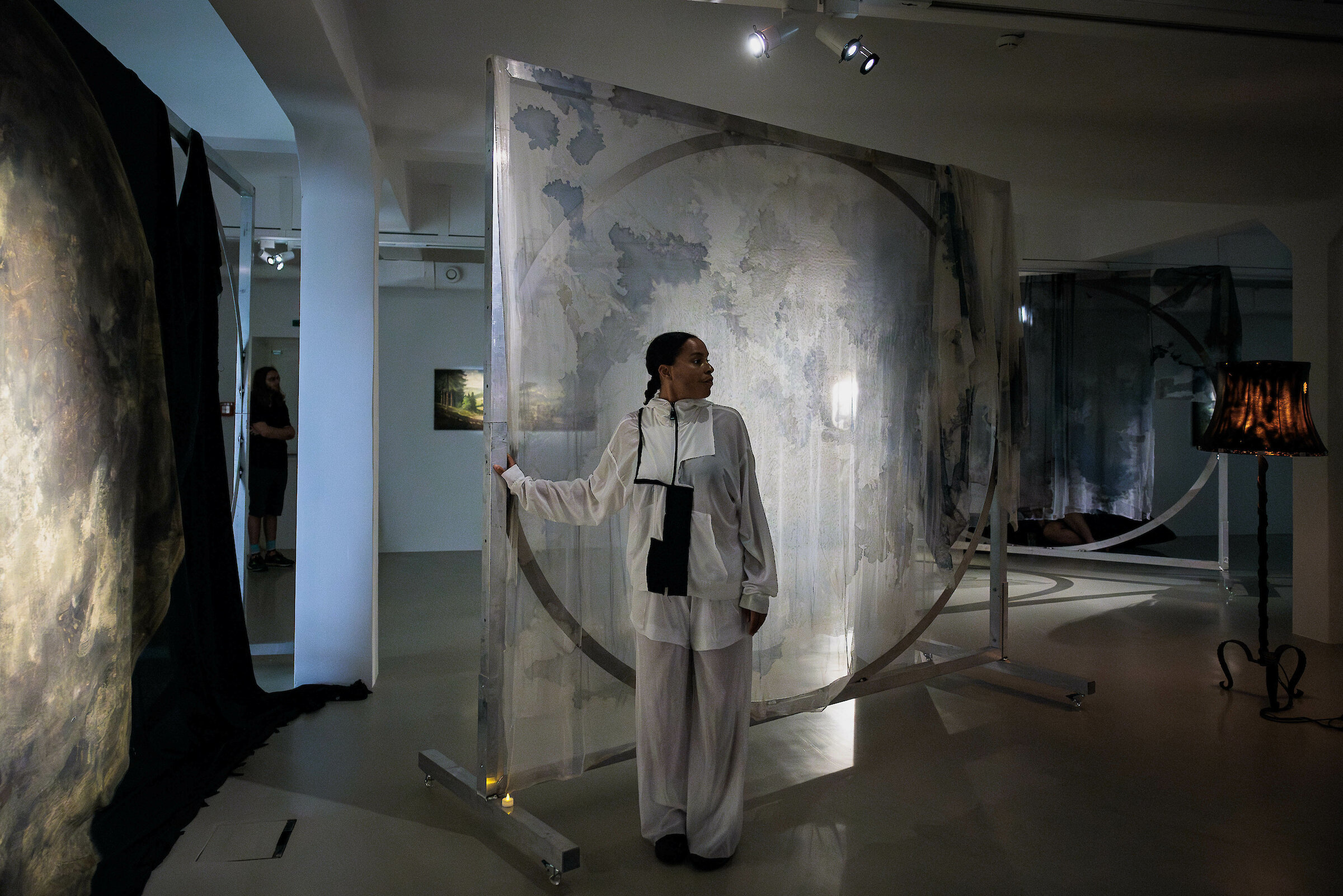
The performance Total Romance: Partial Repair is the centerpiece of Isabel Lewis and Dirk Bell’s joint exhibition Ever/Repair at HALLE FÜR KUNST Steiermark, and will be performed by four performers.
Total Romance: Partial Repair Artist talk with
Thomas D. Trummer and Franz Kapfer
Video

Thomas Trummer and Franz Kapfer have known each other for many years and have collaborated on various occasions. Over the years, a number of exhibitions and published interviews as well as…
Artist talk with Thomas D. Trummer and Franz KapferThe Uncanny within Visual Arts — August Ruhs
Video

Color is both the starting point and the end point for Katherine Bradford, used to depict both diverse communities and the individuals who constitute them. Interweaving abstraction with figuration…
The Uncanny within Visual Arts - August Ruhs Exhibition Tour
Katherine Bradford: American Odyssey
Video

A comprehensive video by kunst-dokumentation.com enables a digital exhibition tour through the show.
exhibition tour katherine bradford Definite or indefinite or…? Debates on gender in art and politics
Silvia Stoller
Video

Katherine Bradford’s painting can be located in the tradition of abstract expressionism, particularly in colour field painting. During her very personal American Odyssey, she developed her very own style: interweaving abstraction and the figurative she creates very special bodies. The bodies’ faces often lack facial expressions.
Silvia Stoller Collective Memory and the Public Realm in the United States
Nassim W. Balestrini
Video

Drawing on examples of US-American monuments, Prof. Dr. Nassim W. Ballestrini’s lecture will discuss collective memory in terms of contemporary debates in the US. Monuments, memorials as well as art in public space contribute significantly to a nation’s culture of remembrance, reflecting political currents and are therefore highly political.
Balestrini Katherine Bradford – American Odyssey
New works
Slide show

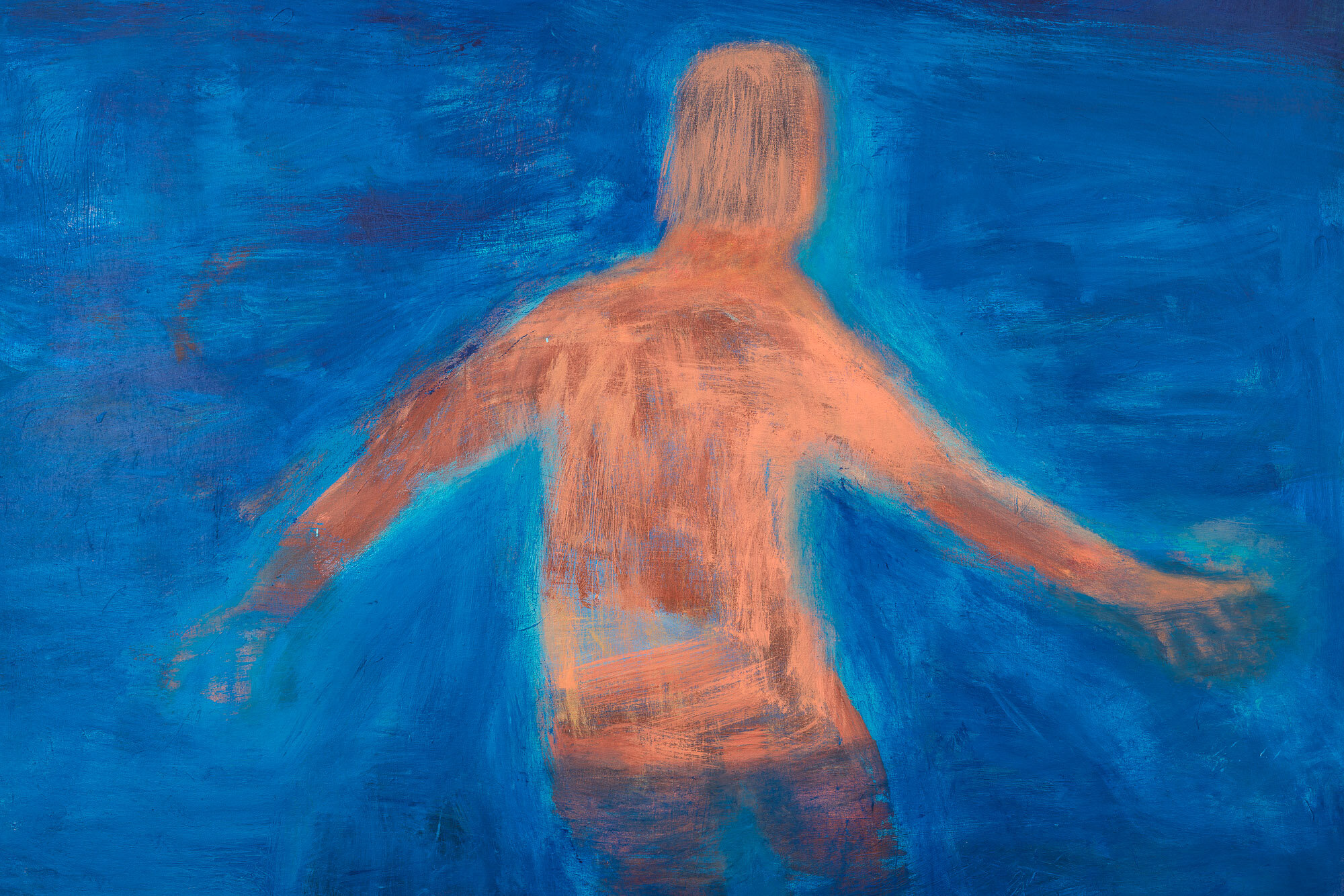
Katherine Bradford’s thinking always begins with color — it is the start and end point of her work. Here abstract and figurative approaches merge. Here the individual and the communal join. This is the…
Katherine Bradford – American Odyssey: New works