Politics and/or Culture — What forms Europe?
Markus Prutsch
Video
Please note that this video is available in German.
As part of the exhibition Europe: Ancient Future, Dr. Markus J. Prutsch will speak about Europe in his role as Senior Researcher of the European Parliament. From the perspective of a historian, Prutsch approaches the shaping forces of Europe, reflecting on the role of politics as well as culture.
He poses the question of how a European identity could be conceived in view of the rather large differences between the individual, European states. The answer cannot lie in the strengthening of nationalism, but requires a historical reflection of Europe as a space of common cultural as well as political values. These should not be determined from above, however, but rather require the promotion of citizens’ initiatives and civil society, which the historian Prutsch illustrates by means of several projects. It becomes clear that Europe and the EU are living projects and ideally are supported by a broad basis that negotiates and updates the common European history again and again. In this respect, the lecture goes beyond the current status of the Union and continues to think Europe in a larger context.
PD Dr. Markus J. Prutsch (*1981 Wagna, lives in Brussels and Strasbourg) is Senior Researcher and Administrator in the European Parliament, responsible for the policy field of culture and education, Private Lecturer in Modern and Contemporary History at the University of Heidelberg and member of the Global Young Academy as well as fellow of the Heidelberg Academy of Sciences. After studying history and political science in Austria and Germany, he was a research assistant at the European University Institute (Florence), where he received his PhD in 2009 with a thesis on 19th-century political history and theory. Prutsch was a researcher at the University of Helsinki as part of the international research project Europe 1815 – 1914 before moving to the European institutions in 2011.
More contributions
Performance Total Romance: Partial Repair
Isabel Lewis, Dirk Bell with vocalist, performer and artist Rupert Enticknap and performer and pole dancer Yann Slattery
Video

The performance Total Romance: Partial Repair is the centerpiece of Isabel Lewis and Dirk Bell’s joint exhibition Ever/Repair at HALLE FÜR KUNST Steiermark, and is performed by four performers. In…
Performance Total Romance: Partial Repair Isabel Lewis, Dirk Bell with vocalist, performer and artist Rupert Enticknap and performer and pole dancer Yann Slattery Isabel Lewis, Dirk Bell
Total Romance: Partial Repair
Performance
Slide show

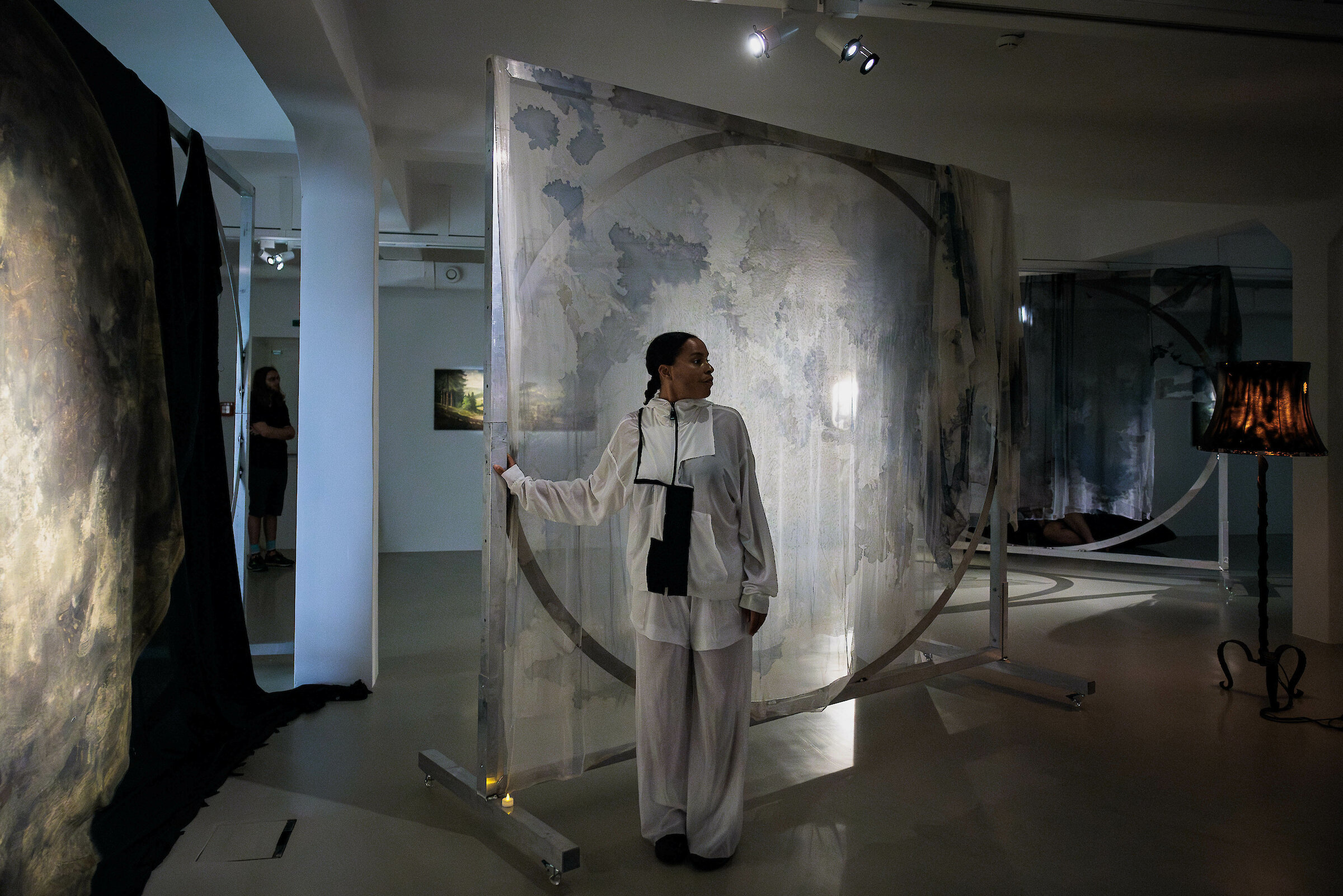
The performance Total Romance: Partial Repair is the centerpiece of Isabel Lewis and Dirk Bell’s joint exhibition Ever/Repair at HALLE FÜR KUNST Steiermark, and will be performed by four performers.
Total Romance: Partial Repair Artist talk with
Thomas D. Trummer and Franz Kapfer
Video

Thomas Trummer and Franz Kapfer have known each other for many years and have collaborated on various occasions. Over the years, a number of exhibitions and published interviews as well as…
Artist talk with Thomas D. Trummer and Franz KapferThe Uncanny within Visual Arts — August Ruhs
Video

Color is both the starting point and the end point for Katherine Bradford, used to depict both diverse communities and the individuals who constitute them. Interweaving abstraction with figuration…
The Uncanny within Visual Arts - August Ruhs Exhibition Tour
Katherine Bradford: American Odyssey
Video

A comprehensive video by kunst-dokumentation.com enables a digital exhibition tour through the show.
exhibition tour katherine bradford Definite or indefinite or…? Debates on gender in art and politics
Silvia Stoller
Video

Katherine Bradford’s painting can be located in the tradition of abstract expressionism, particularly in colour field painting. During her very personal American Odyssey, she developed her very own style: interweaving abstraction and the figurative she creates very special bodies. The bodies’ faces often lack facial expressions.
Silvia Stoller Collective Memory and the Public Realm in the United States
Nassim W. Balestrini
Video

Drawing on examples of US-American monuments, Prof. Dr. Nassim W. Ballestrini’s lecture will discuss collective memory in terms of contemporary debates in the US. Monuments, memorials as well as art in public space contribute significantly to a nation’s culture of remembrance, reflecting political currents and are therefore highly political.
Balestrini Katherine Bradford – American Odyssey
New works
Slide show

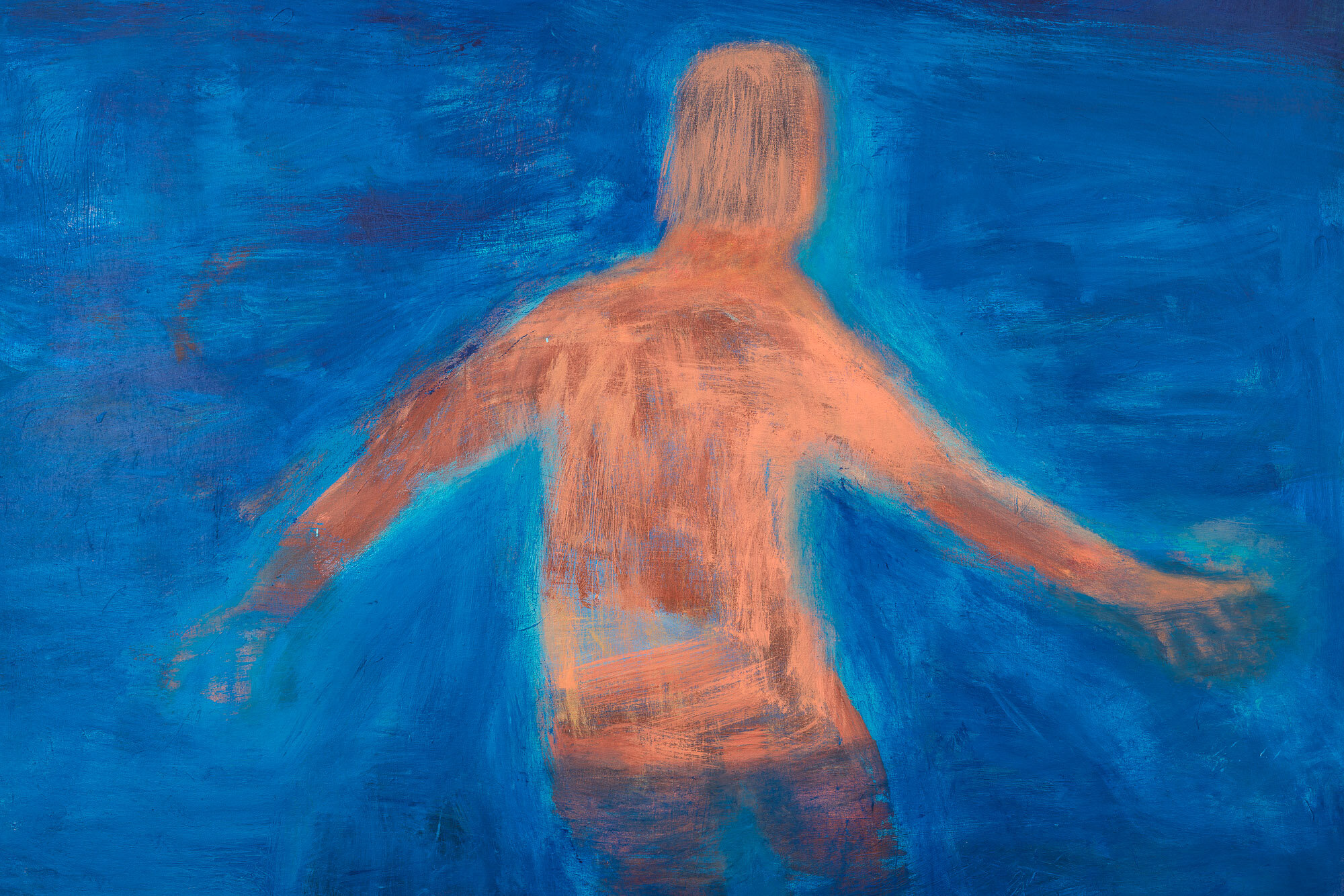
Katherine Bradford’s thinking always begins with color — it is the start and end point of her work. Here abstract and figurative approaches merge. Here the individual and the communal join. This is the…
Katherine Bradford – American Odyssey: New works