Medea
Max Rehberg & Alicia Peckelsen
Video
Please note that this video is available in German.
The contribution shows a contemporary approach to the play Medea in the version by Euripides and the author Sharon Dodua Otoo. This involves a staged performance of one of the great scenes between Medea and Jason.
In the context of the exhibition Europe: Ancient Future, two connections between the play and the themes addressed by the artworks are expressed above all. In analogy to the scenic performance, the exhibition deals with ancient themes and motifs and their contemporary interpretation. The second, less obvious connection points to the good relationship between the individual and the group, or between the individual and society. This relationship was also a major theme in antiquity. And so, on the one hand, the characters Medea and Jason appear strongly as individual persons with different needs. On the other hand, the play also deals with the social structures and unequal gender relations that lead Medea to find herself in a position of being powerless, which she actively confronts in an attempt at self-empowerment and in achieving equality towards her partner.
The contribution is a collaboration with the University of Music and Performing Arts, Graz, Field of study Performing Arts (Acting).
Mentoring and play development: Prof. Ute Rauwald
Performers: Max Rehberg & Alicia Peckelsen
Text under modification of:
Medea, Euripides, After the translation of Paul Träger und J.J.C. Donner
Eure Heimat ist unser Alptraum, Sharon Dodua Otoo
More contributions
Performance Total Romance: Partial Repair
Isabel Lewis, Dirk Bell with vocalist, performer and artist Rupert Enticknap and performer and pole dancer Yann Slattery
Video

The performance Total Romance: Partial Repair is the centerpiece of Isabel Lewis and Dirk Bell’s joint exhibition Ever/Repair at HALLE FÜR KUNST Steiermark, and is performed by four performers. In…
Performance Total Romance: Partial Repair Isabel Lewis, Dirk Bell with vocalist, performer and artist Rupert Enticknap and performer and pole dancer Yann Slattery Isabel Lewis, Dirk Bell
Total Romance: Partial Repair
Performance
Slide show

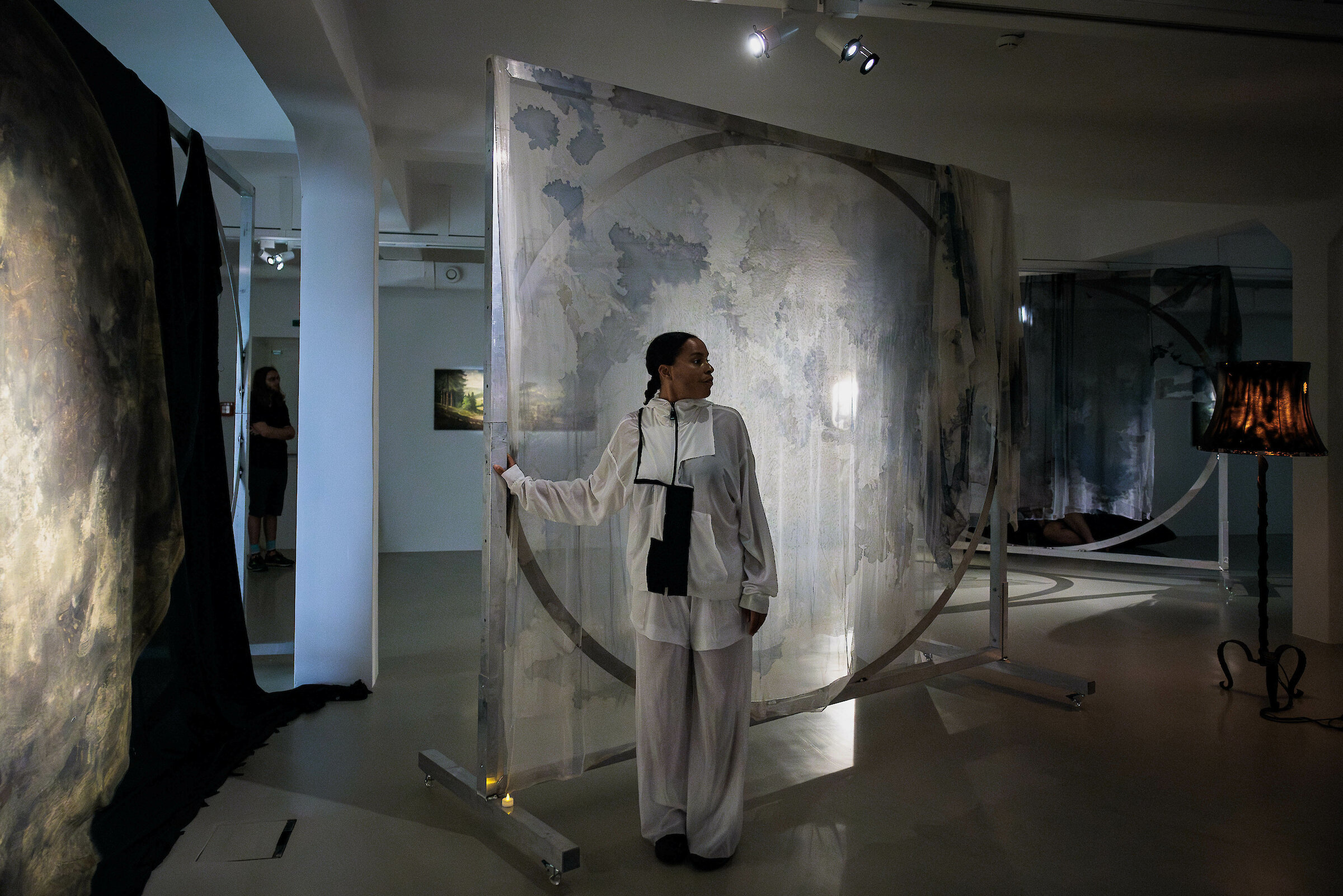
The performance Total Romance: Partial Repair is the centerpiece of Isabel Lewis and Dirk Bell’s joint exhibition Ever/Repair at HALLE FÜR KUNST Steiermark, and will be performed by four performers.
Total Romance: Partial Repair Artist talk with
Thomas D. Trummer and Franz Kapfer
Video


Thomas Trummer and Franz Kapfer have known each other for many years and have collaborated on various occasions. Over the years, a number of exhibitions and published interviews as well as…
Artist talk with Thomas D. Trummer and Franz KapferThe Uncanny within Visual Arts — August Ruhs
Video


Color is both the starting point and the end point for Katherine Bradford, used to depict both diverse communities and the individuals who constitute them. Interweaving abstraction with figuration…
The Uncanny within Visual Arts - August Ruhs Exhibition Tour
Katherine Bradford: American Odyssey
Video


A comprehensive video by kunst-dokumentation.com enables a digital exhibition tour through the show.
exhibition tour katherine bradford Definite or indefinite or…? Debates on gender in art and politics
Silvia Stoller
Video


Katherine Bradford’s painting can be located in the tradition of abstract expressionism, particularly in colour field painting. During her very personal American Odyssey, she developed her very own style: interweaving abstraction and the figurative she creates very special bodies. The bodies’ faces often lack facial expressions.
Silvia Stoller Collective Memory and the Public Realm in the United States
Nassim W. Balestrini
Video


Drawing on examples of US-American monuments, Prof. Dr. Nassim W. Ballestrini’s lecture will discuss collective memory in terms of contemporary debates in the US. Monuments, memorials as well as art in public space contribute significantly to a nation’s culture of remembrance, reflecting political currents and are therefore highly political.
Balestrini Katherine Bradford – American Odyssey
New works
Slide show

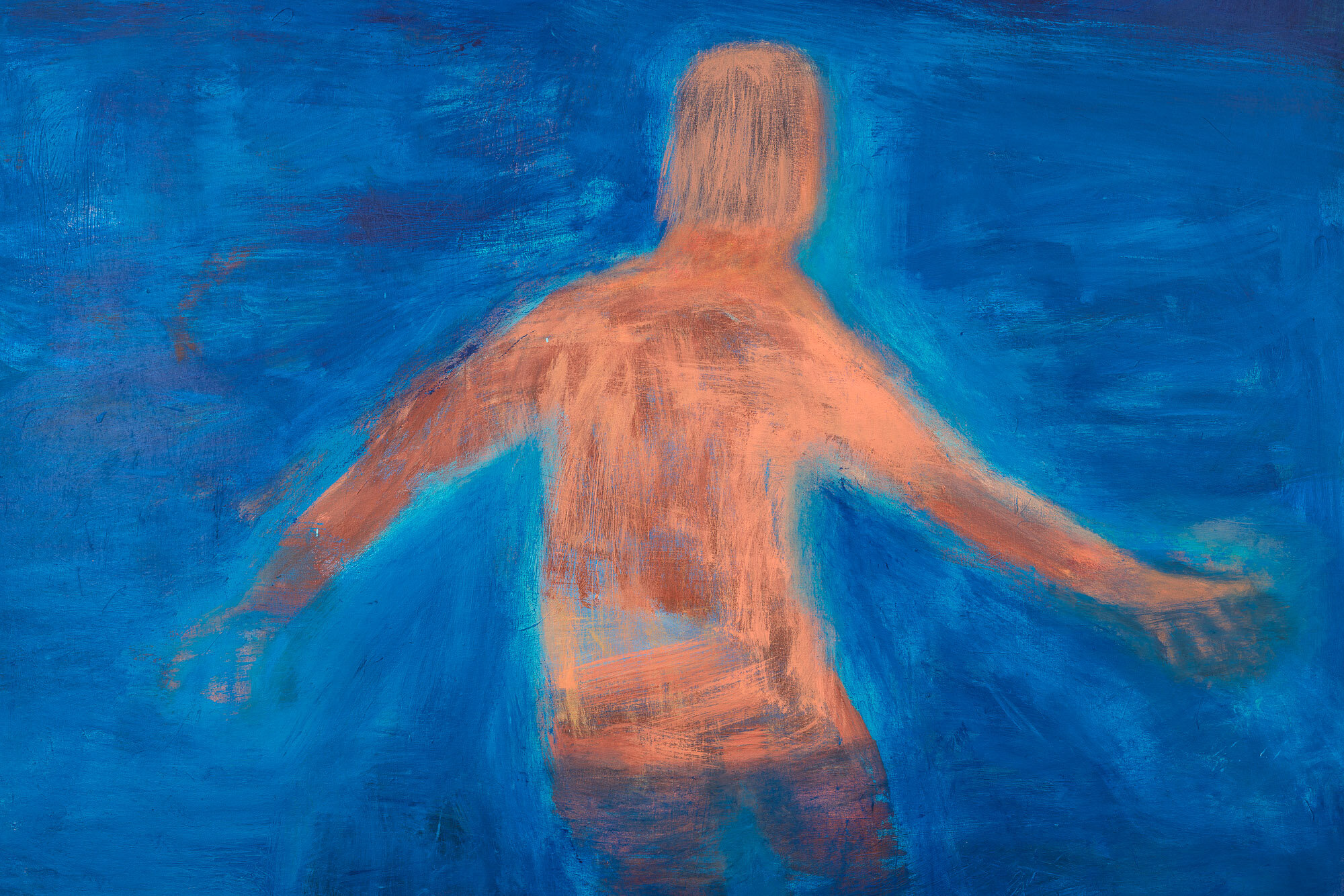
Katherine Bradford’s thinking always begins with color — it is the start and end point of her work. Here abstract and figurative approaches merge. Here the individual and the communal join. This is the…
Katherine Bradford – American Odyssey: New works