Lensable Belief
Marc Siegel
Video
The video is available in English.
Departing from Siegels research on gossip in queer culture, this talk looks at the role of belief in the artistic production of the American underground film scene of the 1960s. What gossip knows depends on who you believe. Gossip’s knowledge always rests in the hands of the trusted others who pass it on. Its circulation fosters a sociality based on the desire to believe what others believe. Siegel’s lecture gives insights in how such a system of secular belief drives the performances, films and writings of key underground film figures like Jack Smith, Mario Montez and Andy Warhol?
Artists
Participating artists
Marc Siegel
Marc Siegel is professor of Film Studies at the Johannes Gutenberg University in Mainz. His research focuses mainly on issues of queer studies and experimental film. Siegel is a member of the Academy of the Arts of the World in Cologne, on the advisory board of the section Forum Expanded of the Berlinale and one of the co-founders of the Berlin artist collective CHEAP as well as artistic director of ZOOM — Labor Ludwig Schönherr. He has curated numerous film series and programs for film and performance festivals as well as museums and galleries, including the Berlin Biennale; the Berlinale; Tate Modern, London; CCCB, Barcelona; Bunkier Sztuki, Krakow; and the Goethe-Institut, Calcutta. His publications include the co-edited volumes, Serge Daney and Queer Cinephilia (meson press, 2022); Film Culture 80: The Legend of Barbara Rubin (Spector Books, 2018); Synchronizing the Arts (Fink, 2013); and Outside. The Politics of Queer Spaces (b_books, 2005). His book A Gossip of Images is forthcoming from Duke University Press.
More contributions
Performance Total Romance: Partial Repair
Isabel Lewis, Dirk Bell with vocalist, performer and artist Rupert Enticknap and performer and pole dancer Yann Slattery
Video

The performance Total Romance: Partial Repair is the centerpiece of Isabel Lewis and Dirk Bell’s joint exhibition Ever/Repair at HALLE FÜR KUNST Steiermark, and is performed by four performers. In…
Performance Total Romance: Partial Repair Isabel Lewis, Dirk Bell with vocalist, performer and artist Rupert Enticknap and performer and pole dancer Yann Slattery Isabel Lewis, Dirk Bell
Total Romance: Partial Repair
Performance
Slide show

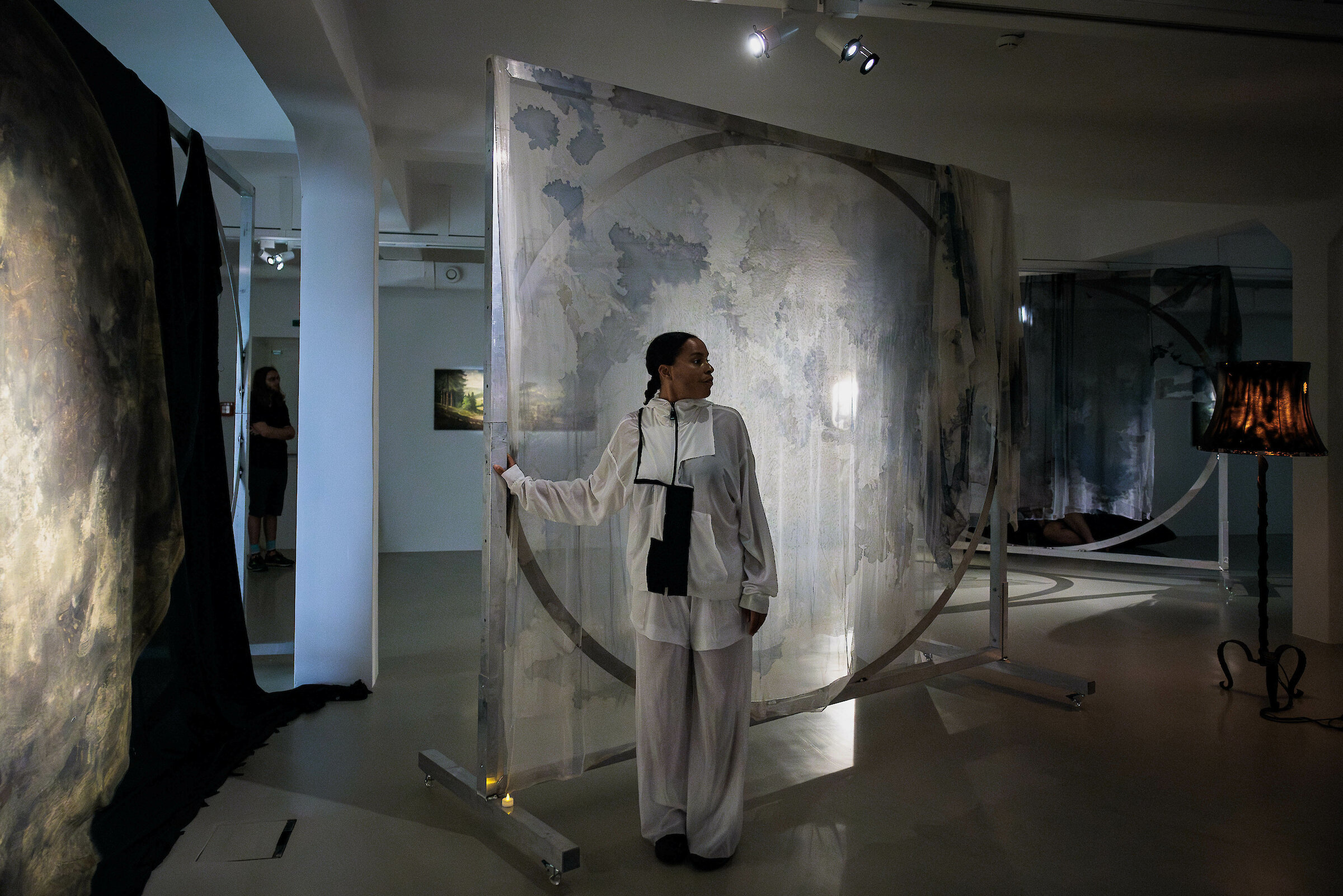
The performance Total Romance: Partial Repair is the centerpiece of Isabel Lewis and Dirk Bell’s joint exhibition Ever/Repair at HALLE FÜR KUNST Steiermark, and will be performed by four performers.
Total Romance: Partial Repair Artist talk with
Thomas D. Trummer and Franz Kapfer
Video

Thomas Trummer and Franz Kapfer have known each other for many years and have collaborated on various occasions. Over the years, a number of exhibitions and published interviews as well as…
Artist talk with Thomas D. Trummer and Franz KapferThe Uncanny within Visual Arts — August Ruhs
Video

Color is both the starting point and the end point for Katherine Bradford, used to depict both diverse communities and the individuals who constitute them. Interweaving abstraction with figuration…
The Uncanny within Visual Arts - August Ruhs Exhibition Tour
Katherine Bradford: American Odyssey
Video


A comprehensive video by kunst-dokumentation.com enables a digital exhibition tour through the show.
exhibition tour katherine bradford Definite or indefinite or…? Debates on gender in art and politics
Silvia Stoller
Video


Katherine Bradford’s painting can be located in the tradition of abstract expressionism, particularly in colour field painting. During her very personal American Odyssey, she developed her very own style: interweaving abstraction and the figurative she creates very special bodies. The bodies’ faces often lack facial expressions.
Silvia Stoller Collective Memory and the Public Realm in the United States
Nassim W. Balestrini
Video

Drawing on examples of US-American monuments, Prof. Dr. Nassim W. Ballestrini’s lecture will discuss collective memory in terms of contemporary debates in the US. Monuments, memorials as well as art in public space contribute significantly to a nation’s culture of remembrance, reflecting political currents and are therefore highly political.
Balestrini Katherine Bradford – American Odyssey
New works
Slide show

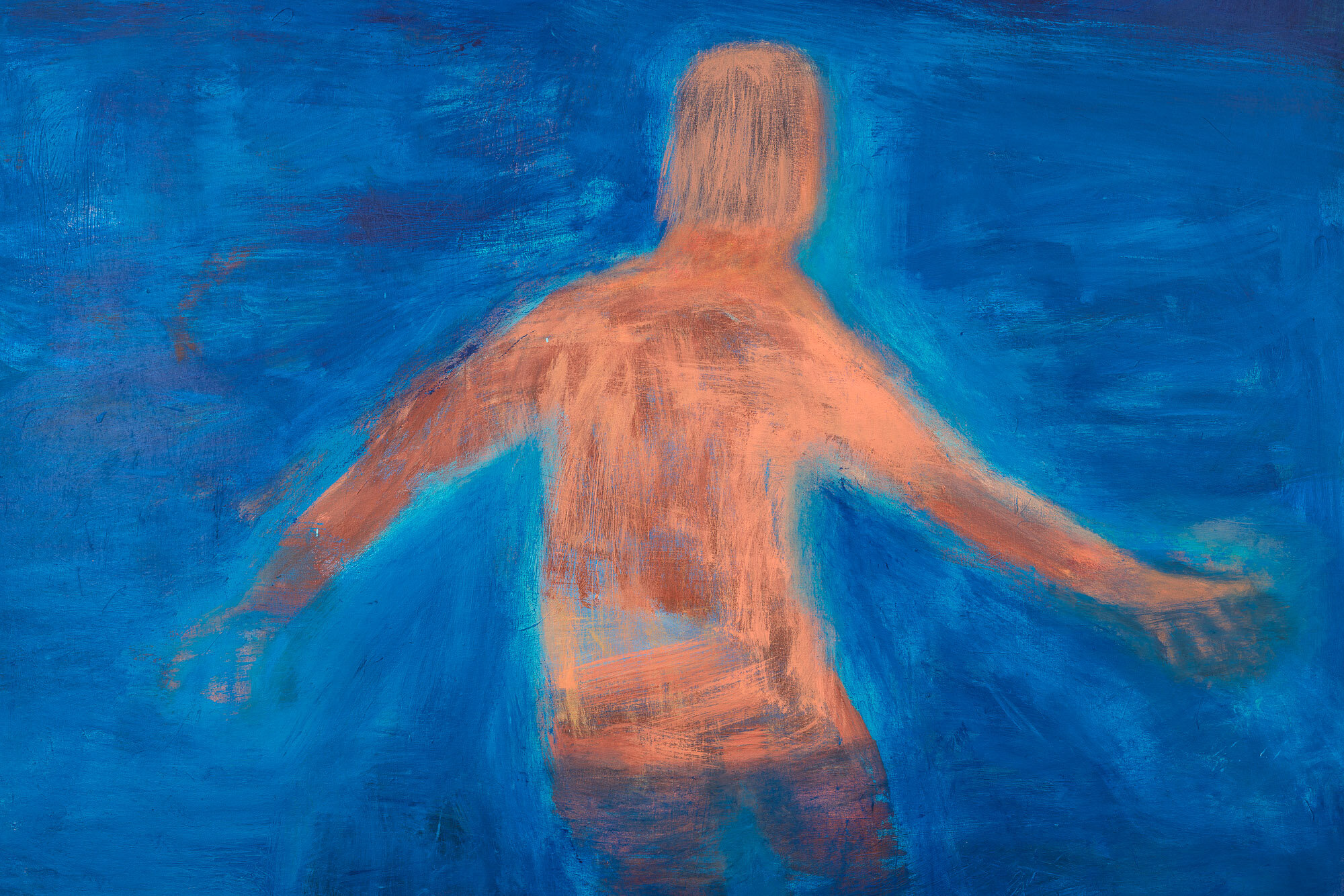
Katherine Bradford’s thinking always begins with color — it is the start and end point of her work. Here abstract and figurative approaches merge. Here the individual and the communal join. This is the…
Katherine Bradford – American Odyssey: New works