Collective Memory and the Public Realm in the United States
Nassim W. Balestrini
Video
Drawing on examples of US-American monuments, Prof. Dr. Nassim W. Ballestrini’s lecture will discuss collective memory in terms of contemporary debates in the US. Monuments, memorials as well as art in public space contribute significantly to a nation’s culture of remembrance, reflecting political currents and are therefore highly political. Departing from controversies such as debates surrounding Stone Mountain in Georgia, where à bas-relief carved in stone depicts the faces of Jefferson Davis, Robert E. Lee and Stonewall Jackson, (i.e. the president and two top generals of the former Confederate states) Ballestrini will debate various aspects of US-American remembrance culture. Black Lives Matter activists have long been calling for the removal of the Stone Mountain monument. Inaugurated in 1972, its realization can be traced back to a 1914 initiative directly linked to the Ku Klux Klan. This is just one example of the increasingly loud demands for and actual removals of monuments paying homage to people who were active supporters of slavery, segregation and the genocide of the indigenous population.
Balestrini will provide insights into the history of the erection of Civil War’s monuments both in the Southern and in the Northern States. In her lecture, she will address issues such as the strategic design both in the construction of the monuments themselves, but also their integration into public space and their intended impacts on certain demographics. Similarly, it is important to think about the types of public spaces and their usage, e.g. civil war monuments located in parks). Based on an interdisciplinary and inter-medial approach, Balestrini’s interpretation of specific monuments will draw from scientific research, literary representations, media discussions, images and texts, and invites a lively discussion after the lecture.
As part of the discussion, remarks on public remembrance cultures will also be read through Katherine Bradford’s practice. In her monumental paintings, Bradford depicts diverse communities populated by superheroes, superheroines and groups of everyday anonymous figures, overcoming constructed boundaries of race and gender. While her works are not directly political, they embody a deeply democratic approach to American collective memory. With larger-than-life representations of common people, Bradford’s monumental power is rather metaphorical, locating heroic social achievements in the everyday.
Prof. Dr. Nassim W. Ballestrini’s lecture on monuments, collective memory and the culture of remembrance in the USA starts at 6 pm at HALLE FÜR KUNST. Sandro Droschl, Director and Caro Feistritzer, Curatorial Assistant of HALLE FÜR KUNST Steiermark will expand on the lecture in relation to the exhibition Katherine Bradford: American Odyssey.
Artists
Participating artists
Univ.-Prof. Dr.phil. Nassim Balestrini
is Professor of American Studies and Intermediality and heads both the Department of American Studies and the Center for Intermediality Studies at the University of Graz.
Her research interests focus on American literatures and cultures from the 18th century to the present. She enjoys working at the intersection of transnational and comparative subject matter, and engages in integrating different media, genres, cultures, and languages into her studies. In recent years, her research has focused on climate change drama and theater, on contemporary poetry by non-white and bi-cultural authors, on Indigenous hip-hop artists, and on intermediality theory. She particularly cherishes dialogue between artists and scholars.
More contributions
Performance Total Romance: Partial Repair
Isabel Lewis, Dirk Bell with vocalist, performer and artist Rupert Enticknap and performer and pole dancer Yann Slattery
Video


The performance Total Romance: Partial Repair is the centerpiece of Isabel Lewis and Dirk Bell’s joint exhibition Ever/Repair at HALLE FÜR KUNST Steiermark, and is performed by four performers. In…
Performance Total Romance: Partial Repair Isabel Lewis, Dirk Bell with vocalist, performer and artist Rupert Enticknap and performer and pole dancer Yann Slattery Isabel Lewis, Dirk Bell
Total Romance: Partial Repair
Performance
Slide show

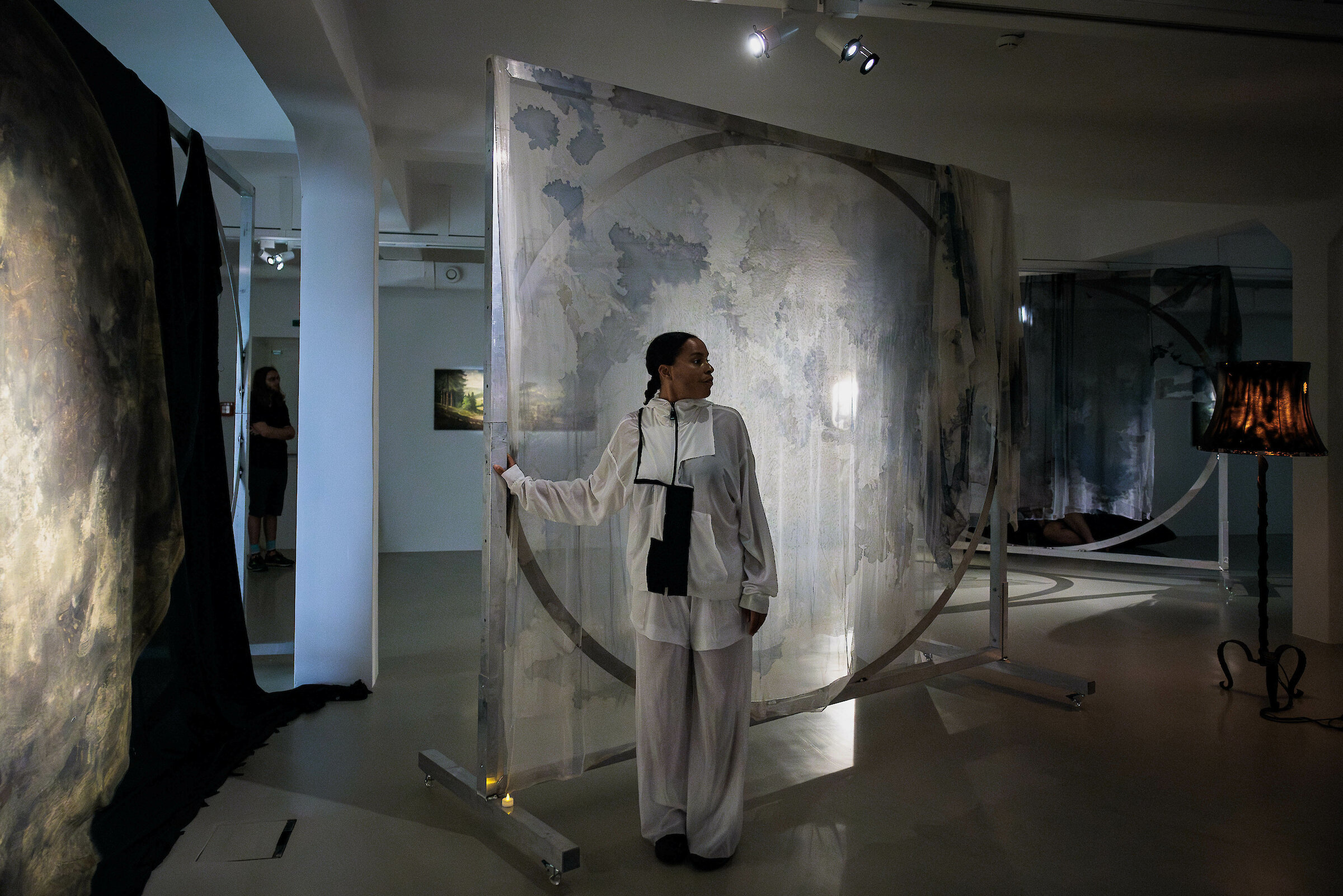
The performance Total Romance: Partial Repair is the centerpiece of Isabel Lewis and Dirk Bell’s joint exhibition Ever/Repair at HALLE FÜR KUNST Steiermark, and will be performed by four performers.
Total Romance: Partial Repair Artist talk with
Thomas D. Trummer and Franz Kapfer
Video


Thomas Trummer and Franz Kapfer have known each other for many years and have collaborated on various occasions. Over the years, a number of exhibitions and published interviews as well as…
Artist talk with Thomas D. Trummer and Franz KapferThe Uncanny within Visual Arts — August Ruhs
Video

Color is both the starting point and the end point for Katherine Bradford, used to depict both diverse communities and the individuals who constitute them. Interweaving abstraction with figuration…
The Uncanny within Visual Arts - August Ruhs Exhibition Tour
Katherine Bradford: American Odyssey
Video


A comprehensive video by kunst-dokumentation.com enables a digital exhibition tour through the show.
exhibition tour katherine bradford Definite or indefinite or…? Debates on gender in art and politics
Silvia Stoller
Video


Katherine Bradford’s painting can be located in the tradition of abstract expressionism, particularly in colour field painting. During her very personal American Odyssey, she developed her very own style: interweaving abstraction and the figurative she creates very special bodies. The bodies’ faces often lack facial expressions.
Silvia Stoller Katherine Bradford – American Odyssey
New works
Slide show

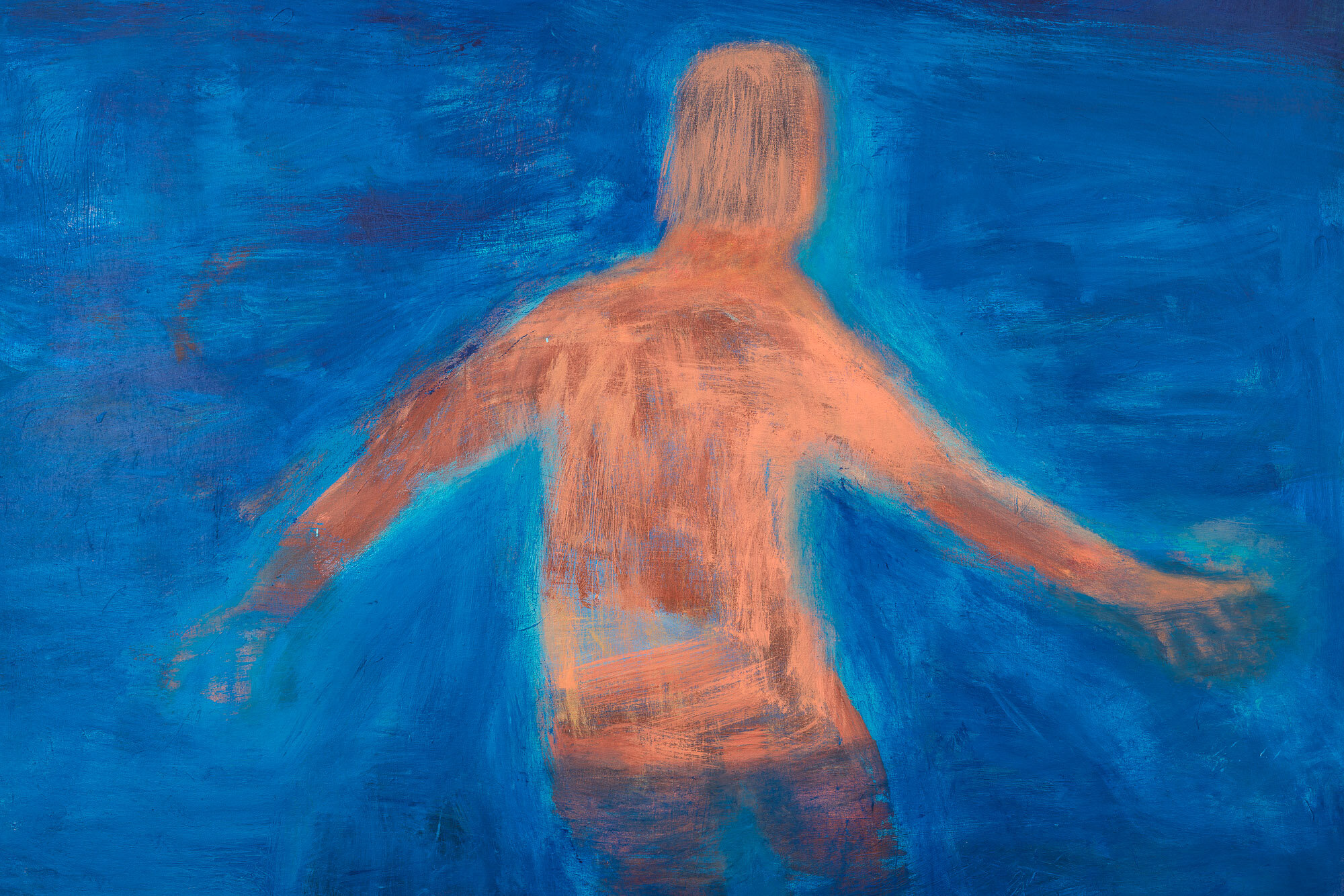
Katherine Bradford’s thinking always begins with color — it is the start and end point of her work. Here abstract and figurative approaches merge. Here the individual and the communal join. This is the…
Katherine Bradford – American Odyssey: New worksLara Favaretto – Thinking Head | Clandestine talk | FLAT


On January 18, 2024 at 6 pm, a Cladestine Talk took place in a non-public room in the HALLE FÜR KUNST Steiermark.
Lara Favaretto – Thinking Head | Clandestine talk | FLAT